Sewing needle
A pointed tool with an eye that draws thread through material to create stitches.
Classification
- Mechanisms
- poking
- Tasks
- join, repair
- Materials
- carbon steel, stainless steel
- Historical materials
- bone, antler, ivory, bronze, iron
Principles
Concentrates force into a point;carries a flexible filament through material;forms a mechanical connection by interlocking thread;relies on friction to hold stitches in place.
Evolution
- ~15,000 BP – 300 BCE
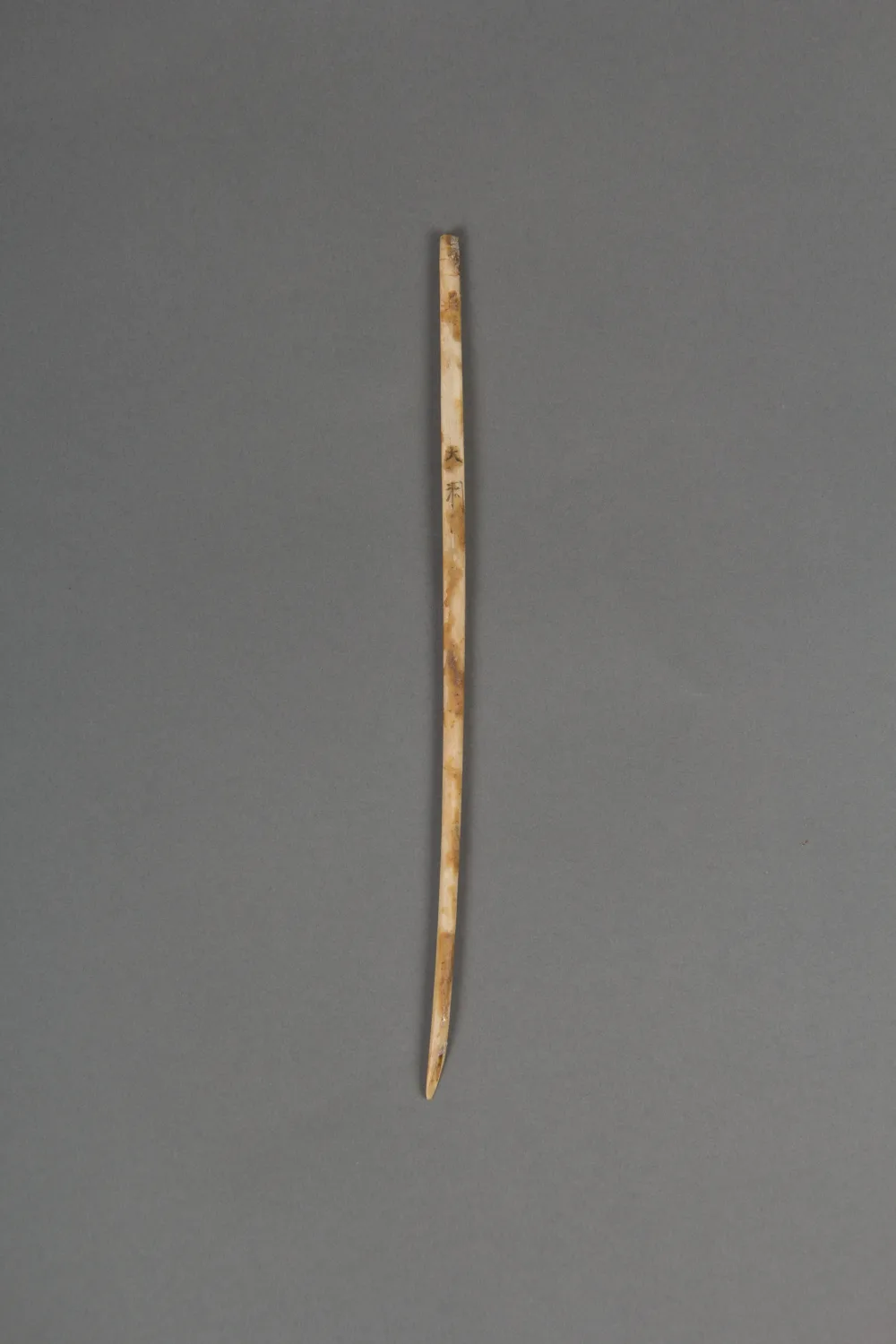
Metropolitan Museum of Art. The Harry G. C. Packard Collection of Asian Art, Gift of Harry G. C. Packard, and Purchase, Fletcher, Rogers, Harris Brisbane Dick, and Louis V. Bell Funds, Joseph Pulitzer Bequest, and The Annenberg Fund Inc. Gift, 1975. Public Domain (Open Access).
Bone needle[1]
The earliest eyed needles, shaped from splinters of animal bone — from Magdalenian Europe through Japan's Final Jōmon period.
- Viking Age (c. 793–1066 CE)
Bronze and iron needle[2]
A metal stage between the bone tradition and industrial steel, found in graves on Gotland, Sweden.
- 20th century – present
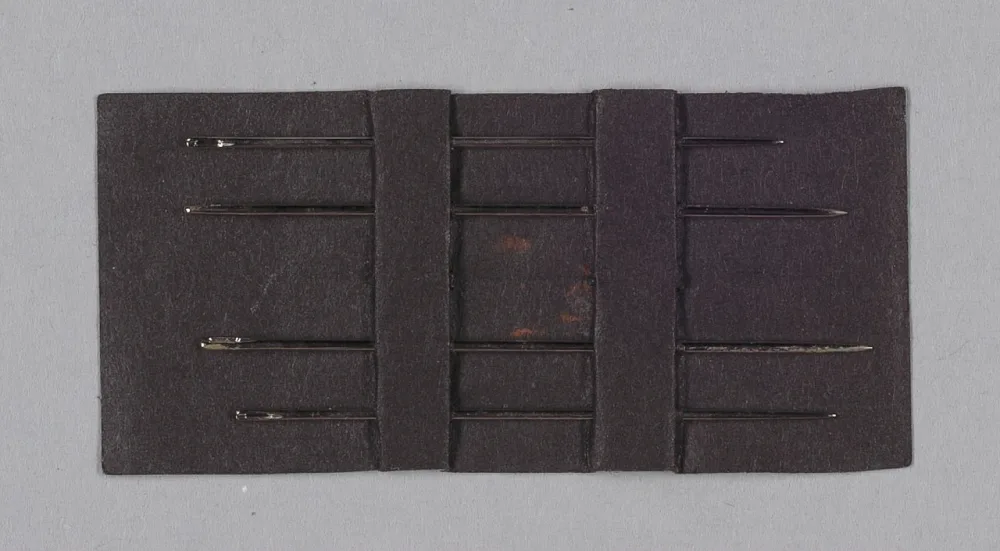
National Museum of African American History and Culture. Gift from Mae Reeves and her children, Donna Limerick and William Mincey, Jr. CC0.
Steel needle
The dominant material since industrialization.
Articles
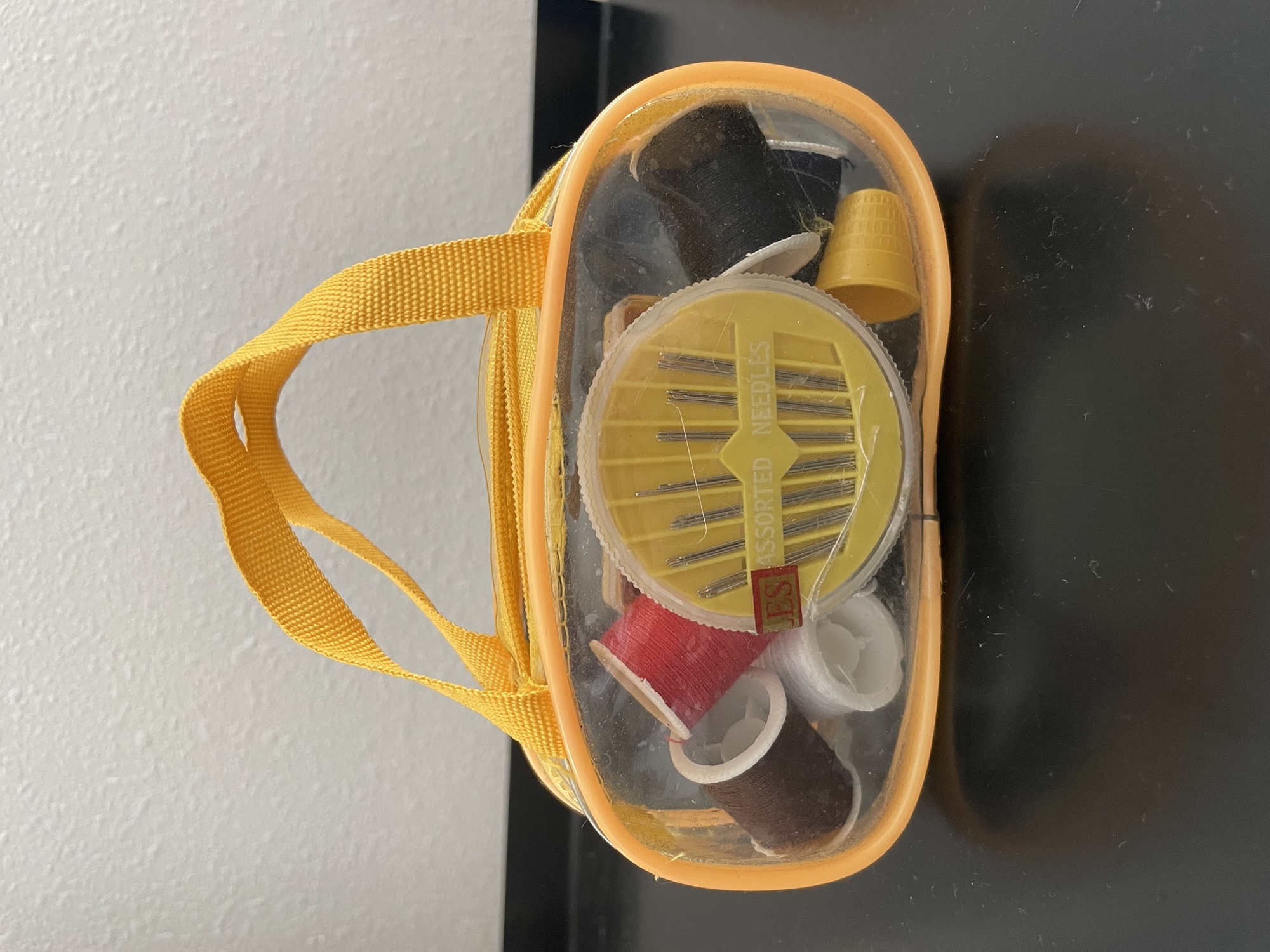 A prehistoric tool at the dollar storeJuly 31, 2026
Related objects
- awl
- pin
- nail
- staple
- bodkin
- sewing machine needle
- embroidery needle
- surgical needle