Scissors
A hand tool with two pivoted blades that cut by shearing material between opposing edges.
Classification
- Mechanisms
- cutting, pivoting
- Tasks
- cut
- Materials
- stainless steel, plastic (handles)
- Historical materials
- bronze, iron, steel
Principles
Pivoted double-lever action;opposing blades shear material between them;fulcrum concentrates hand force at the cutting edge.
Evolution
- ca. 2nd century AD (Roman)
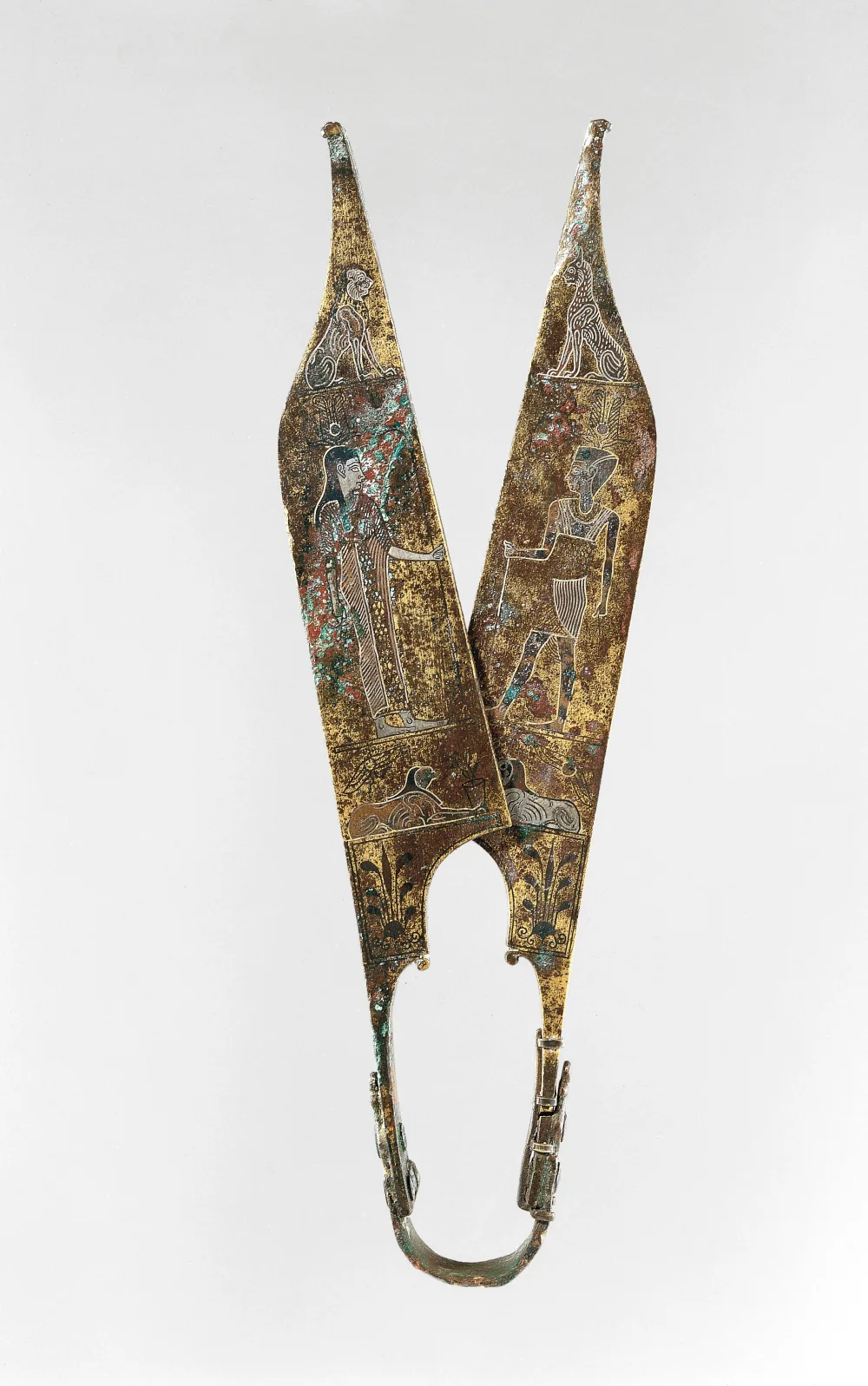
Metropolitan Museum of Art. Rogers Fund, 1939. Public Domain (Open Access).
Spring shears[1]
A single curved strip of metal — no pivot. Squeezing the two blades together against their own spring cuts the material.
- Tang dynasty (618–907), China
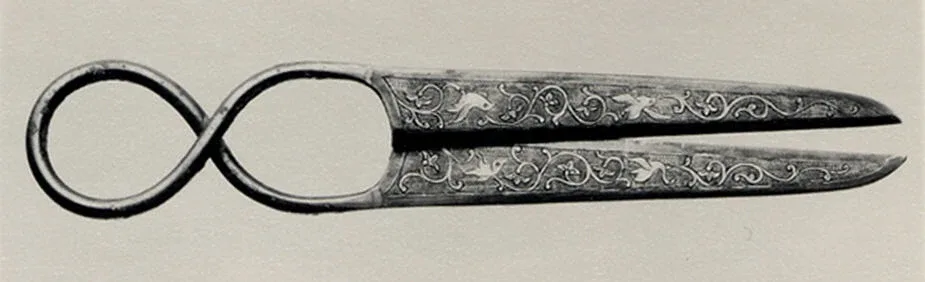
Metropolitan Museum of Art. Purchase, Arthur M. Sackler Gift, 1974. Public Domain (Open Access).
Pivoted scissors[2]
A pivot joins two blades at a fulcrum — the cross-blade shear that defines modern scissors.
- 1761 – present
Steel scissors[3]
Robert Hinchliffe of Sheffield made the first pair of scissors from hardened, polished cast steel in 1761, using crucible steel (developed in Sheffield in the 1740s) in place of the softer iron/low-carbon steel used previously. Cast steel held a sharper edge and could be mass-manufactured, and Sheffield grew into the center of the English scissors trade on that basis. The number of scissor-specific manufacturers at the trade's peak is not pinned down here — sources describe rapid growth and later steep decline (Sheffield's cutlery trade overall shrank to a handful of firms by the late 20th century) but don't agree on a precise 19th-century company count, so no figure is asserted.
Related objects
- shears
- knife
- sewing needle
- pinking shears
- scissor case
Sources
- 1.The Metropolitan Museum of Art, "Shears" (accession 39.2.2)
- 2.The Metropolitan Museum of Art, "Scissors" (accession 1974.268.13)
- 3.Grace's Guide to British Industrial History, "Robert Hinchcliffe," citing R.E. Leader, Sheffield in the Eighteenth Century (2nd ed., 1905) and Calvert Holland, The Vital Statistics of Sheffield (1843); Heritage Crafts Association, "Scissor Making"