Basket
A container woven or plaited from flexible material into a rigid or semi-rigid shape, used to hold, carry, or store objects.
Classification
- Mechanisms
- containing, carrying
- Tasks
- carry, contain, store
- Materials
- reed, willow, rattan, plastic, wire
- Historical materials
- reed, willow, rattan, grass, palm leaf, splint (ash, oak), bast fiber
Principles
Interlocks flexible strands into a self-supporting structure;distributes load across a woven lattice rather than a single wall;an open weave allows ventilation and drainage while still containing solid contents.
Evolution
- New Kingdom, Dynasty 18 (ca. 1550–1300 BCE), Egypt
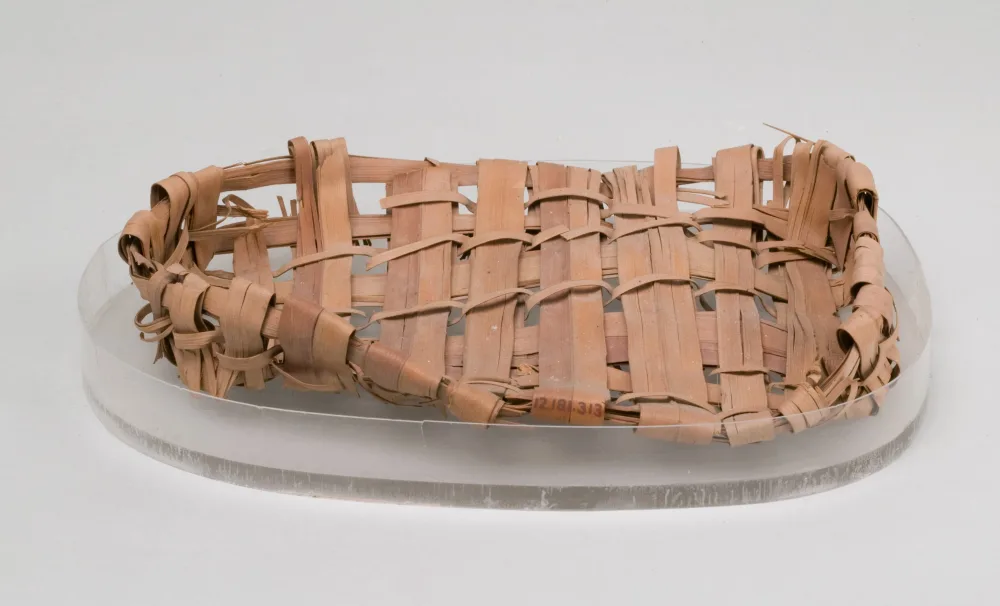
Metropolitan Museum of Art. Rogers Fund, 1912. Public Domain (Open Access).
Fiber basket[1]
Found at the Temple of Hatshepsut, Asasif, Thebes.
- ca. 1850 (American)
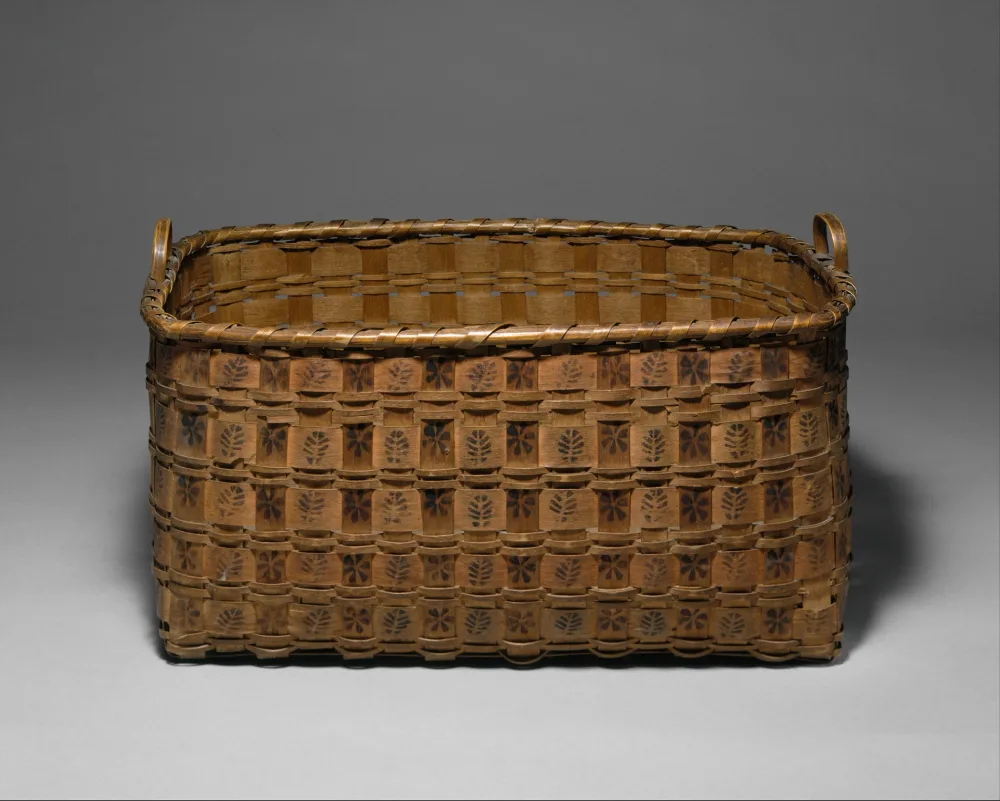
Metropolitan Museum of Art. Ralph T. Coe Collection, Gift of Ralph T. Coe Foundation for the Arts, 2011. Public Domain (Open Access).
Splint basket[2]
Woven from thin strips of ash wood.
- 20th century – present
Woven basket[3]
Coiled or plaited from reed, willow, or rattan, flexible strands interlocked into a self-supporting shape without adhesives or fasteners — the same basic technique used across cultures and centuries, largely unchanged by mechanization.
- 20th century – present
Plastic basket
Injection-molded in one piece, no weaving — the form familiar from produce bins.
Related objects
- bucket
- hamper
- laundry basket
- crate
- creel
- trug