Bucket
An open-topped, roughly cylindrical container with a handle, used to contain, carry, and pour liquids or loose materials.
Classification
- Mechanisms
- containing, carrying, pouring
- Tasks
- carry, contain, store
- Materials
- galvanized steel, plastic (polyethylene/polypropylene)
- Historical materials
- wood (stave-built, coopered), leather, wrought iron, silver, earthenware/ceramic, tin
Principles
Holds a volume within rigid or semi-rigid walls;rigid handle transfers carried weight to the arm;watertight seams or seamless construction contain liquid;wide opening trades spill resistance for ease of filling/scooping.
Evolution
- 4th–7th century (Byzantine Egypt)
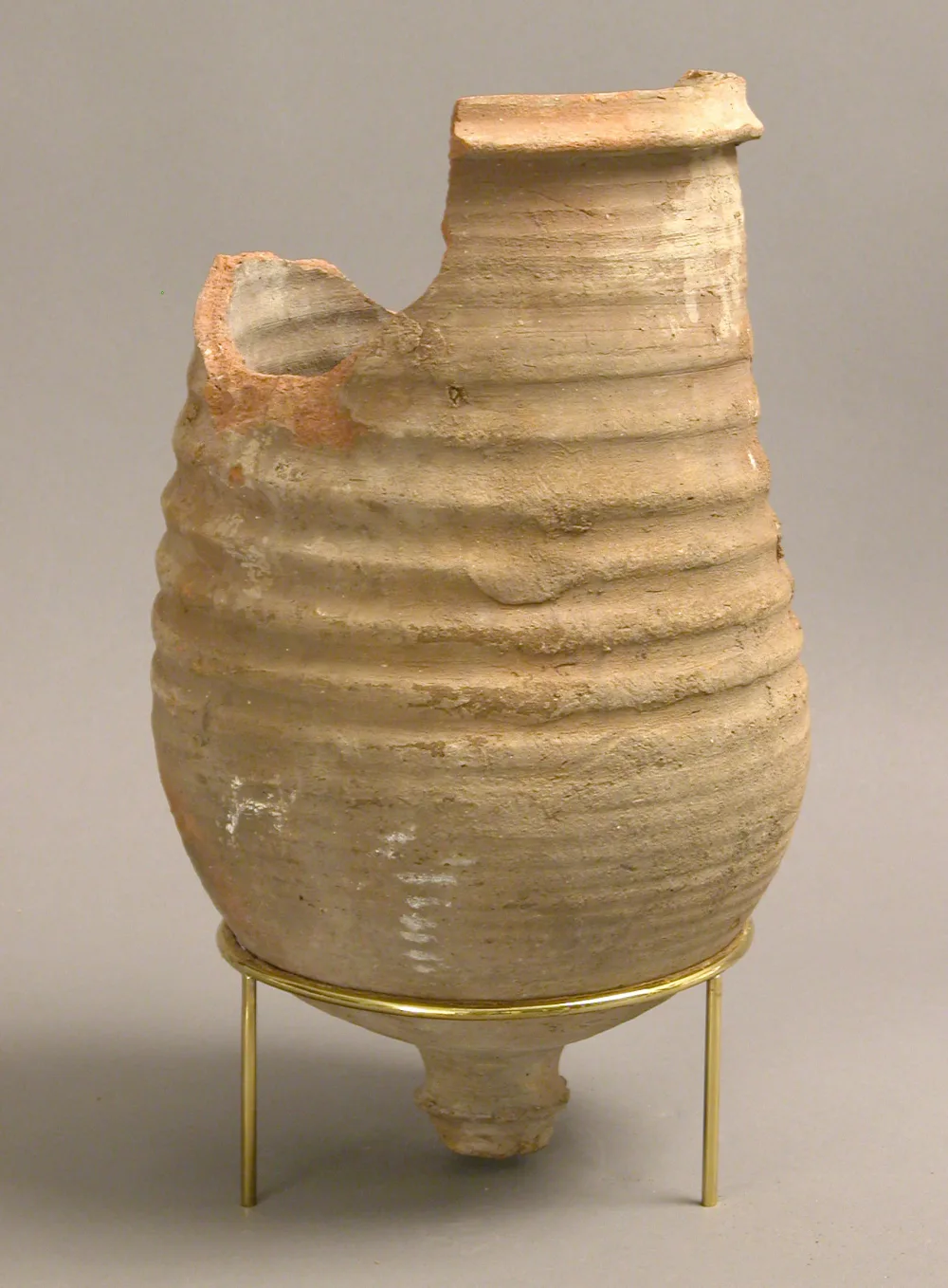
Metropolitan Museum of Art. Rogers Fund, 1925. Public Domain (Open Access).
Earthenware bucket[1]
A single-piece earthenware vessel, shaped and fired from clay with an attached loop handle — an alternative to the stave-built wood and hammered-metal buckets used in the same era. Fired clay is heavier and more brittle than wood or metal, making ceramic buckets better suited to storage than to hard daily hauling.
- 600s (Byzantine)
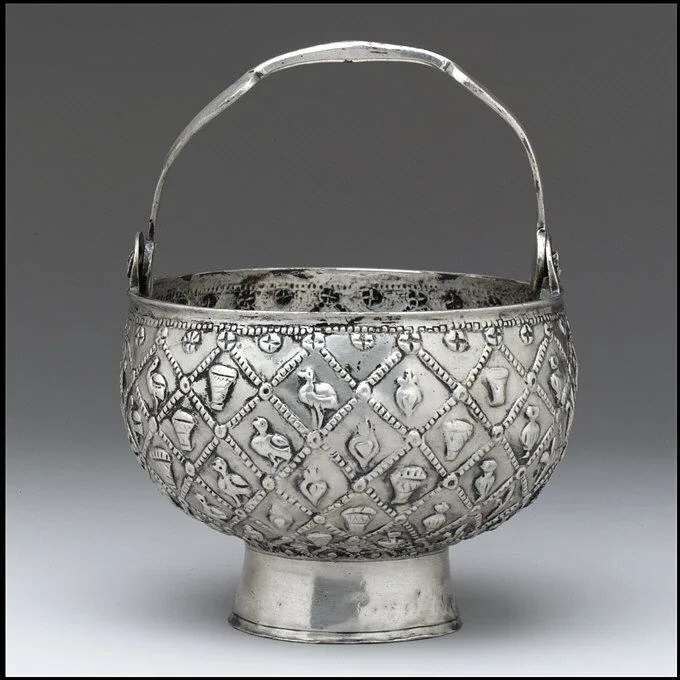
Metropolitan Museum of Art. Gift of J. Pierpont Morgan, 1917. Public Domain (Open Access).
Silver bucket[2]
A silver vessel with a swinging handle and a bird-decorated body, raised on a small foot. Its precious-metal construction and decoration mark it as a luxury or ceremonial object rather than an everyday work bucket.
- 19th century – present
Galvanized and plastic bucket[3]
Mass-produced, corrosion-resistant materials replace wood, leather, and precious metal. Hot-dip galvanizing (dipping cleaned iron/steel in molten zinc) was patented by Stanislas Sorel in France in 1836–37; the process and its household applications (corrugated roofing, wire netting, and similar sheet-metal goods including buckets) were established practice by the time this 1911 encyclopedia entry was written.
Related objects
- pail
- basin
- watering can
- barrel
- well bucket
- cistern
- washtub
- amphora
- churn