Toilet
A plumbing fixture for disposing of human waste, typically using water to flush it through a trap into a sewer or septic system.
Classification
- Mechanisms
- flushing, valving, sealing
- Tasks
- dispose, drain
- Materials
- vitreous china, porcelain, plastic (seats, tanks), stainless steel (institutional/portable units)
- Historical materials
- earthenware/ceramic, cast iron, wood (seats, early boxed-in cisterns), brass fittings, lead pipe
Principles
Uses a water-filled trap (S-bend/P-trap) to seal sewer gases out of the room;uses a rush of water and gravity to carry waste through a trapway;siphon action empties the bowl once the water level rises past a threshold;a cistern or tank stores a fixed volume of water to complete one flush.
Evolution
- ca. 1865
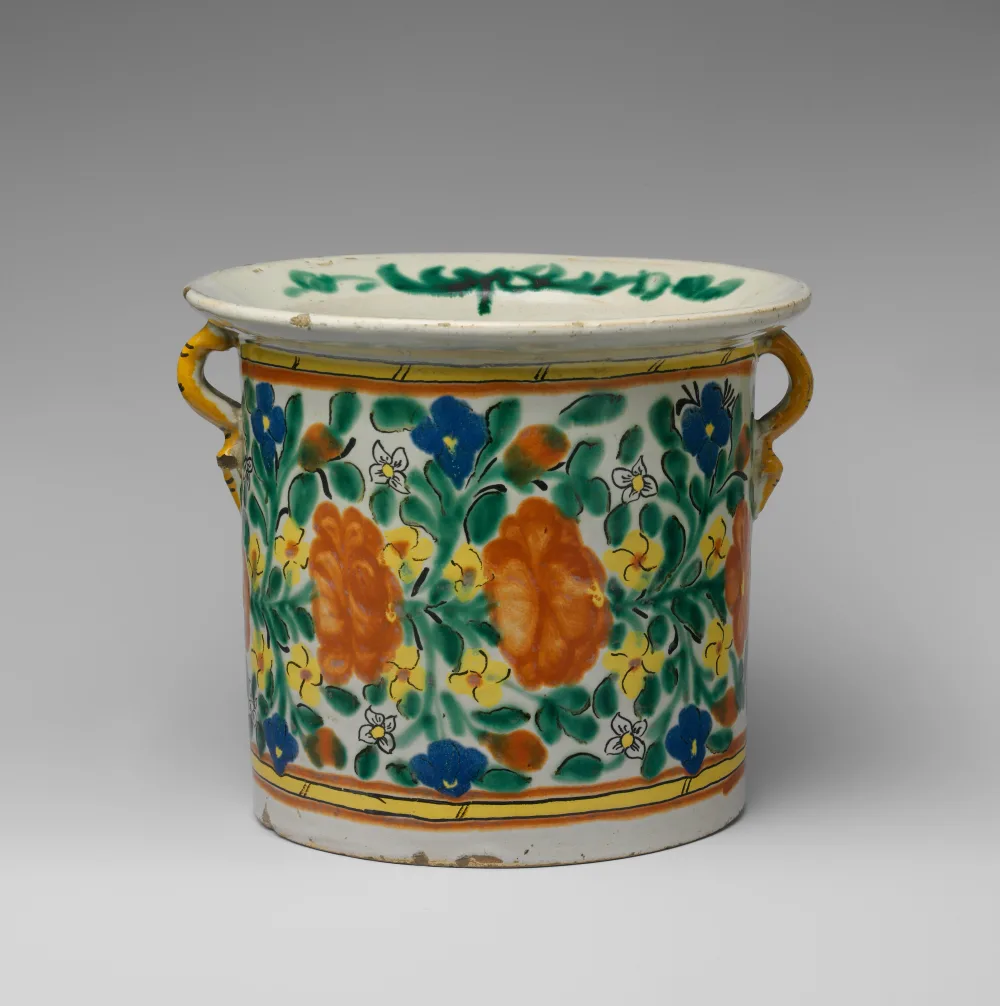
Metropolitan Museum of Art. Gift of Mrs. Robert W. de Forest, 1911. Public Domain (Open Access).
Chamber pot[1]
The pre-plumbing precursor — a portable vessel, emptied by hand rather than flushed.
- 1775 (Alexander Cumming, UK patent no. 1105)
S-trap flush toilet[2]
Introduced the S-shaped trap that holds standing water to seal sewer gas out of the room — the direct technical ancestor of the modern fixture.
- 20th century – present
Modern flush toilet[3]
Vitreous china bowl and tank, siphon-jet or gravity flush.
Related objects
- chamber pot
- bidet
- urinal
- outhouse / privy / latrine
- septic tank
- sewer system
- toilet paper
- toilet brush
- toilet seat
- squat toilet
- composting toilet
- portable/chemical toilet