Measuring cup
A graduated vessel used to measure the volume of liquid or dry ingredients, most often in cooking and baking.
Classification
- Mechanisms
- containing, measuring, pouring
- Tasks
- measure
- Materials
- plastic, stainless steel
- Historical materials
- tin, glass (e.g. Pyrex)
Principles
Calibrated volume markings against a standardized unit;converts a recipe's stated quantity into a physical fill line;relies on a consistent reference unit (e.g. cup, milliliter) shared between recipe and tool.
Evolution
- 8th–9th century (Egypt or Syria)
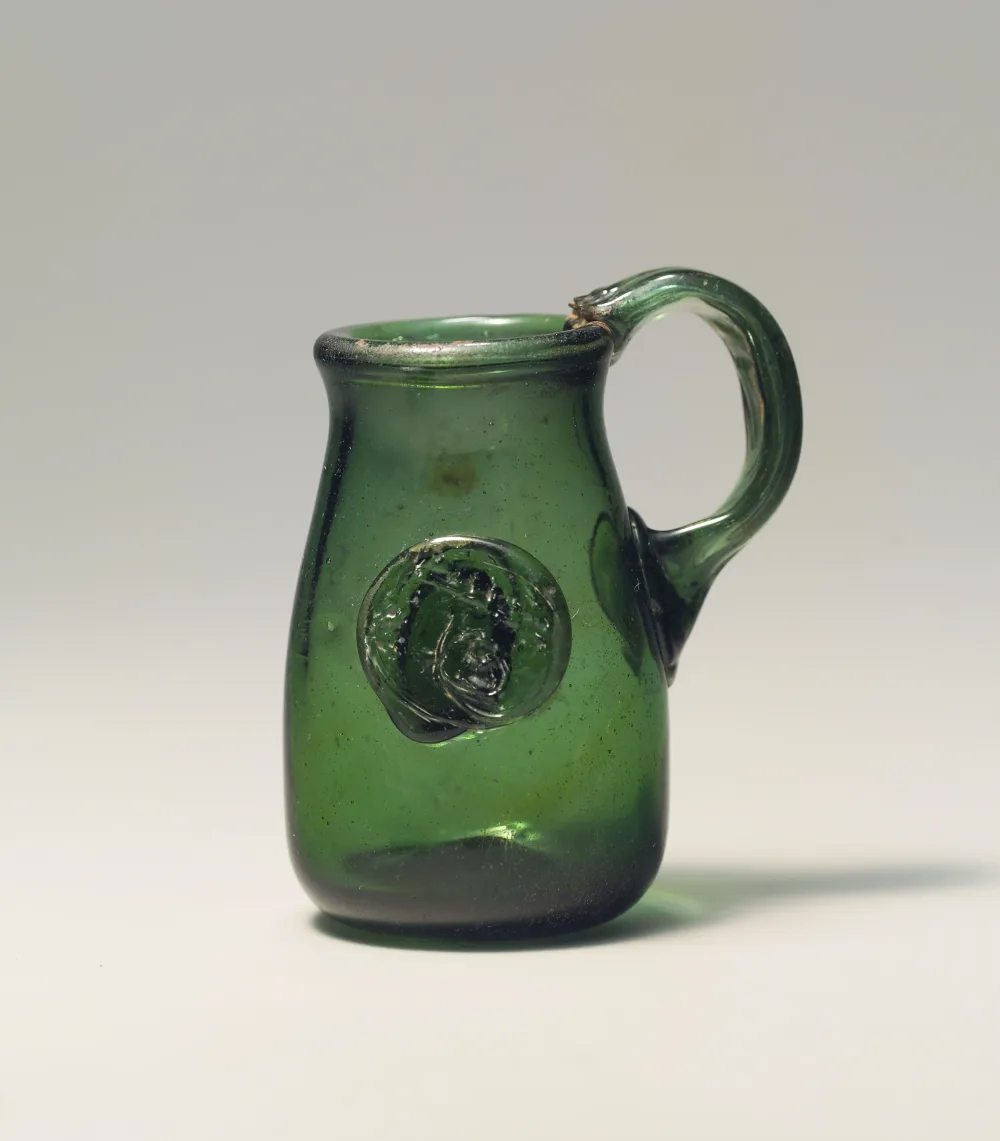
Metropolitan Museum of Art. Gift of Helen Miller Gould, 1910. Public Domain (Open Access).
Glass measuring vessel[1]
Cataloged by the Met as a graduated measuring cup — blown and impressed glass, worked on the pontil.
- early–mid 20th century
Tin and Pyrex measuring cup[2]
Corning introduced Pyrex, a heat-resistant borosilicate glass, in 1915 — clear glass measuring cups with molded volume lines let cooks read the fill level directly, unlike opaque tin cups of the same era.
- 20th century – present
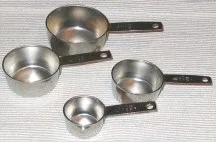
Wikimedia Commons. Alcinoe. Public Domain (author-released).
Plastic and steel measuring cup[3]
Molded plastic and stamped stainless steel became the standard measuring-cup materials over the 20th century — lightweight and cheap to mass-produce, with steel adding dishwasher- and oven-safe durability tin and early plastics lacked.
Related objects
- measuring spoon
- kitchen scale
- graduated cylinder
- beaker
- ladle